
In January 2013, Matthew Fenner says he was held down, choked, and beaten for two hours inside Word of Faith Fellowship, a church on a compound in Spindale, North Carolina, while members prayed to expel his “gay demons.” On Monday, more than thirteen years later, the case against the minister accused of leading that beating finally came to an end in Room 510 of the Buncombe County Courthouse in Asheville. It ended without a jury ever deciding anything.
Brooke Covington, 68, took a plea deal. She had been facing a felony charge of second-degree kidnapping. Instead, she entered an Alford plea to two misdemeanors: false imprisonment and simple assault. With an Alford plea, a defendant doesn’t admit she did it, but concedes the state has enough evidence to convict, and the court treats her as guilty anyway.
Inside Room 510
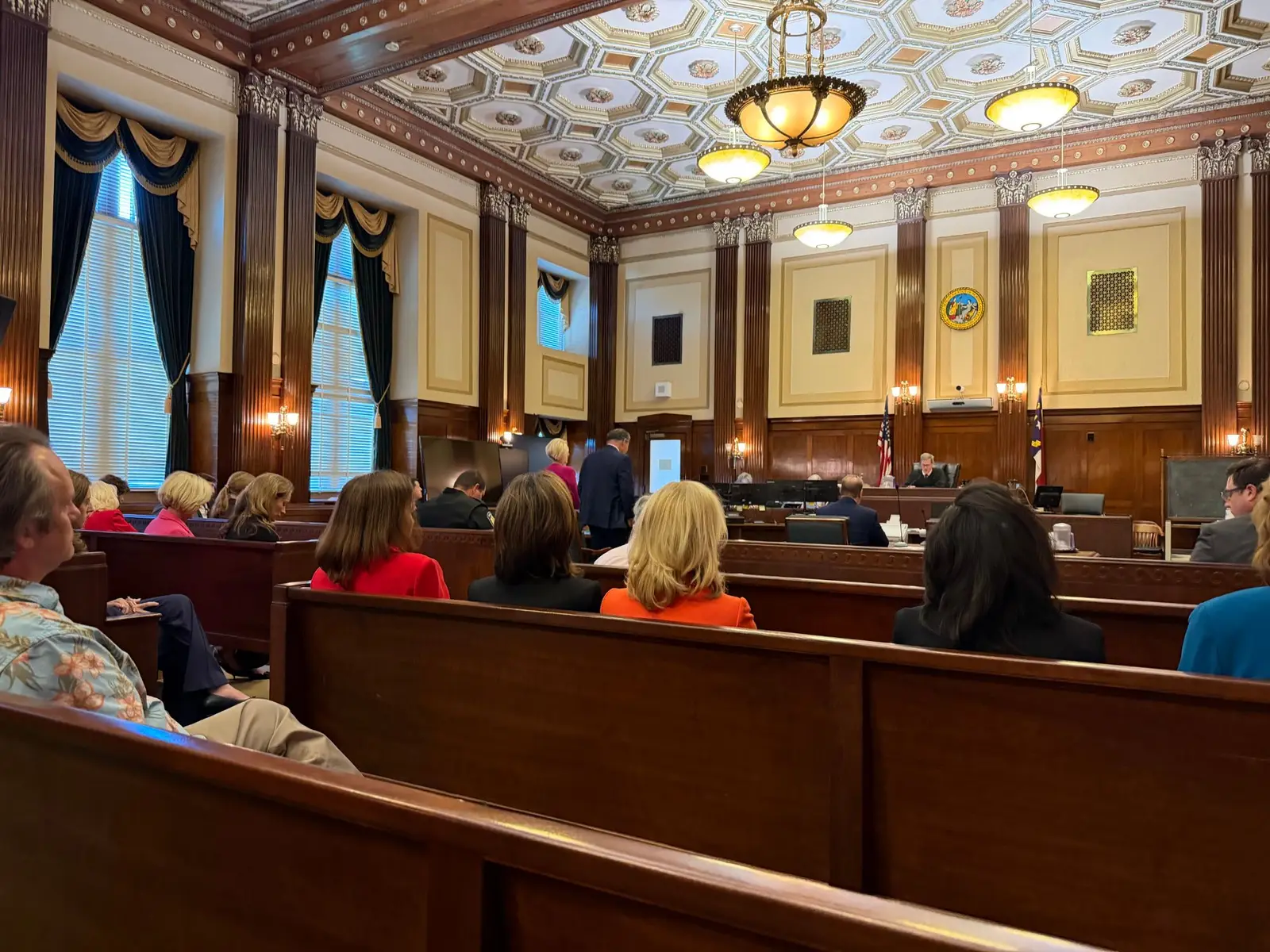
Room 510 looks like the set of a courtroom drama, with wooden columns, an ornate honeycomb ceiling, navy and gold curtains, and portraits of old judges staring down from the walls. On Monday morning it was packed with people waiting on the regular docket, and the whole room smelled like cigarettes.
You could spot the Word of Faith members immediately. The men wore black suits and starched white collars, and the women had that stiff blonde helmet hair. They marched in together and filled three rows, with the women in bright pink, orange, turquoise, and red dresses. Lined up together, they looked like crayons in a Crayola box. Jane Whaley, the woman former members describe as a cult leader, never showed up.
Brooke sat defiant, surrounded by dozens of Word of Faith Fellowship members. When she glanced my way, she smiled. Then court resumed.
What happened in court
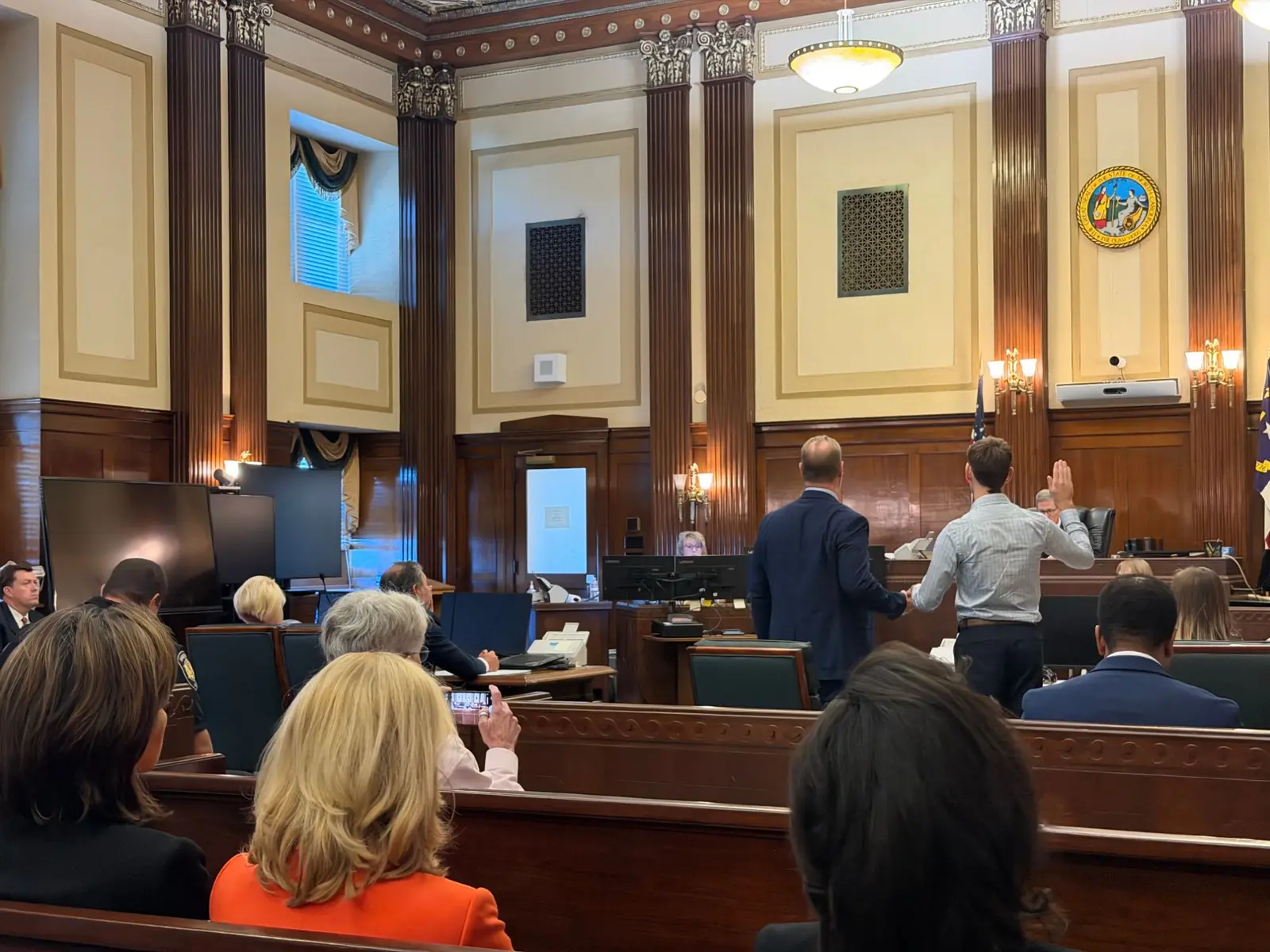
Covington’s attorney, Noell Tin, told the court that she maintains her innocence but wants closure. He argued that she wasn’t charged until two years after the incident, and that according to four witnesses, that January 2013 service was no different from any other church service. He said Covington simply asked Matthew what was wrong, and that it had nothing to do with Matthew’s sexual orientation. He acknowledged there is a wide chasm between the two sides’ accounts of what happened.
Those four witnesses weren’t in the courtroom Monday. The people who were there and ready to testify for the state included former members Sarah Anderson and Rachael Bryant. Both were inside the church when Matthew was attacked, and both have already testified against Covington once, at the 2017 trial that ended in a mistrial. Sarah was one of the five church members charged in the beating. At that trial, she testified that she took part in the assault and that Covington was the ringleader. She also testified that church leaders wrote her affidavit for her and coached her to say no one touched Matthew. Rachael testified at that same trial that she was present during the attack, and she told the jury Covington said Matthew’s mannerisms were “all homosexual devils and we are going to get it out of you.”
At Monday’s hearing, Matthew gave a victim impact statement. While he spoke, Word of Faith members in the gallery shook their heads no at his account of what happened. Former member Danielle Cordes also spoke, addressing Covington directly. “You have pled guilty to crimes today, but most of the people in this room cannot even fathom the crimes you’ve actually committed,” she said. She got only a few more lines in before the defense objected. For Danielle, Monday was the first time in eight years she had seen her own mother, who is still in the church. Her mother looked right through her like a stranger.
The sentence
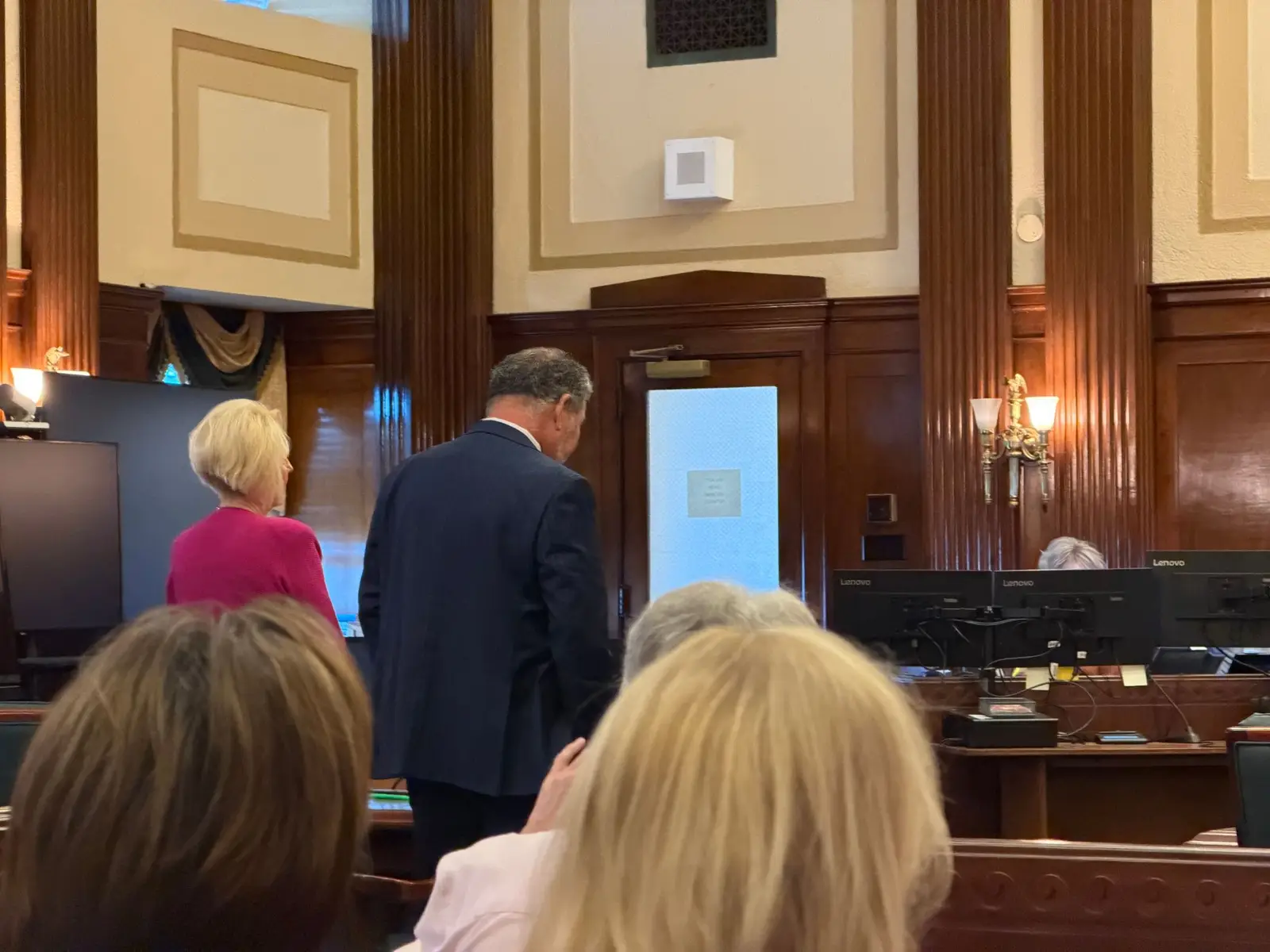
Judge Thornburg granted Covington a conditional discharge, so no judgment of guilt was entered. She gets 24 months of probation, with the first 12 supervised. The judge made a specific finding that she needed a longer probation period than the law normally calls for. She has to complete 30 hours of community service at a place that benefits children or young adults, and she owes about $665 in court costs and fees. Her probation transfers to Rutherford County, where Word of Faith Fellowship sits.
If she completes all of it, the charges get dismissed. If she violates probation, she faces a suspended 45 days in jail on the false imprisonment count and another 30 days on the assault count, served back to back. She’s due back in court on September 25, 2028, when the judge will decide whether she met the terms. A local prosecutor will handle that hearing, because the DA who brought this case to a close is retiring.
How a case sits for thirteen years
To understand how strange this timeline is, you need to know what normal looks like. In 2019, the median statewide disposition time for superior court felonies in North Carolina was 259 days, according to UNC School of Government data. Even the slowest counties don’t come close to this case. Catawba County had the highest median felony disposition time in the state that year, at 673 days (report). Covington’s case took about seven times longer than that, and about eighteen times longer than the statewide median.
Covington was tried in 2017, but that trial ended in a mistrial after the jury foreman brought his own research into deliberations. After that, the COVID-19 outbreak, a move to remove the original prosecutor that ended with the suspension of the law license of the attorney making the request — a suspension now on hold while he appeals — deaths or retirements of lawyers on both sides, and handing the trial to a new prosecutor in a new jurisdiction all pushed a retrial further down the road, as the Associated Press reported.
“They did everything to support the church and not the victim”
For most of those years, Matthew says he felt like he was fighting the system that was supposed to be on his side. He told me he always knew Rutherford County was not the place where his case would be handled properly.
“You’ve now had people within the system itself who have come forward and acknowledged that the people who were supposed to be protecting me went and aided the people of the church who were trying to discredit me,” he said. “They did everything to support the church and not the victim.”
He said he asked repeatedly for the original prosecutor, District Attorney Ted Bell, to step aside, and that his requests alone weren’t enough. His effort to have Bell removed failed, but after an independent investigator got involved, Bell offered to hand the case off. Matthew still counts it as a victory. “We won,” he said.
Matthew was 19 years old in January 2013, when he says he was beaten inside the church. On Monday, he flew in from Sacramento, where he’s now a medical resident. He finished medical school in May. When I asked him what kept him going all these years, he told me he couldn’t let the voice telling him to move on and live his life overpower the one telling him to keep going for the people still inside. “It’s always, always, always been about the kids and the families that I watched be hurt and be robbed and be tortured and be separated and broken,” he said.
Before we parted, he wanted me to know one last thing. “I think today Brooke got more mercy than I think she’s shown anybody else ever,” he said. He said it was a kind of mercy that many people still inside the church have never received.
The DA
The case was prosecuted by District Attorney Jon David, who serves Bladen, Brunswick, and Columbus counties. His district is on the coast, hundreds of miles from the foothills of Rutherford County and from any perceived influence of Jane Whaley and her church. After the hearing, he told me that the original reporting and the podcast coverage gave him context on what he called a labyrinthine case that “goes off a million different directions.”
He said it was his job to make sure the sentence addressed Covington’s conduct in this one case, and not to inject larger issues into it. He also said that through his study of the case, he came to understand there were numerous other examples that were remarkably similar to Matthew’s.
“The victory’s in the process,” he told me. He said Matthew understood he was “just the visible tip of an iceberg of people that had suffered tremendously at this church’s hands for years.”
Not everyone on Matthew’s side of the courtroom saw it that way. Several former members told me they were disappointed in the plea deal. They feel Covington got off easy, and they know that if she completes her probation, the charges will be dismissed and the case could one day disappear from her record.
What mattered was who showed up for Matthew. His supporters were former members who had left the church, some related to people just a few rows away. “Brooke has to reckon with the fact that children that bore her name, that she raised in her household, were sitting on our side of the courtroom,” David said. “If there’s ever been a greater indictment on the failed business model that they’ve embraced, I can’t think of anything more powerful than that.”
The family on the other side of the aisle
For some former members who came to support Matthew, Monday was the first time in years they had been in the same room as relatives still in the church.
Sarah Anderson told me she tried to say hello to every family member she saw. None of them responded, including her brother, whom she hadn’t seen in about ten years. “He and his wife were there, just completely blank, blank faces,” she said. She said she had come to terms with that, but was still hopeful. “Maybe some words that were spoken by Matthew today got to somebody’s heart,” she said. “I was in their position at one time.”
Sarah was pre-med while she was in the church. She said leadership supported that until the day they told her God said she wasn’t meant to be a doctor, and they switched her major. After she left, she went back to school, and today she’s a physician assistant. “I just wake up happy every day,” she said.
Rachael Bryant stood in the hallway on purpose so she could say hello to her brother, Justin, but church members had him surrounded, holding onto his arms. “I was like, ‘Hi, Justin.’ Didn’t even look at me,” she said. Her aunt and cousin didn’t look at her either.
Rachael left the church about eleven years ago, late at night while everyone else was at a service. She told me what finally pushed her out was watching the church take control of her baby daughter. “They took 16 years of my life where I cared what they thought,” she said. “I’m not giving them another day of my life.”
What Word of Faith Fellowship says
When court let out, the Word of Faith members left right away. I caught their attorney, Josh Farmer, in the hallway, and he emailed me a written statement that afternoon. He called the case thirteen years of “lawfare” against Covington and the church, instigated by Matthew and maintained by the state. He wrote that Covington is falsely accused, that the church’s prayer and ministry are not violent or abusive, and that “Matthew was not mistreated.”
Farmer argued that the plea itself proves the church’s point, writing that the state’s willingness to resolve the case with no admission of guilt “clearly shows how little confidence the State placed in the credibility of the alleged ‘victim’, Matthew Fenner.”
So the DA says she pleaded guilty, and the church’s lawyer says she admitted nothing. On paper, both of them are sort of right, and that’s the strange thing about an Alford plea.
Why I was there
Word of Faith Fellowship was the very first story I ever told on PRETEND. I’m about to start my tenth year making this show, and on Monday I drove three and a half hours from Raleigh to Asheville because this case still wasn’t over. When I ran into Matthew outside the courthouse, I told him I couldn’t believe this was still going on. Neither could he.
I’m working on a full episode about Monday’s hearing, with more from Matthew, the DA, and the former members who showed up for him. If you want the whole backstory, listen to season three of PRETEND, The Prophet.
