
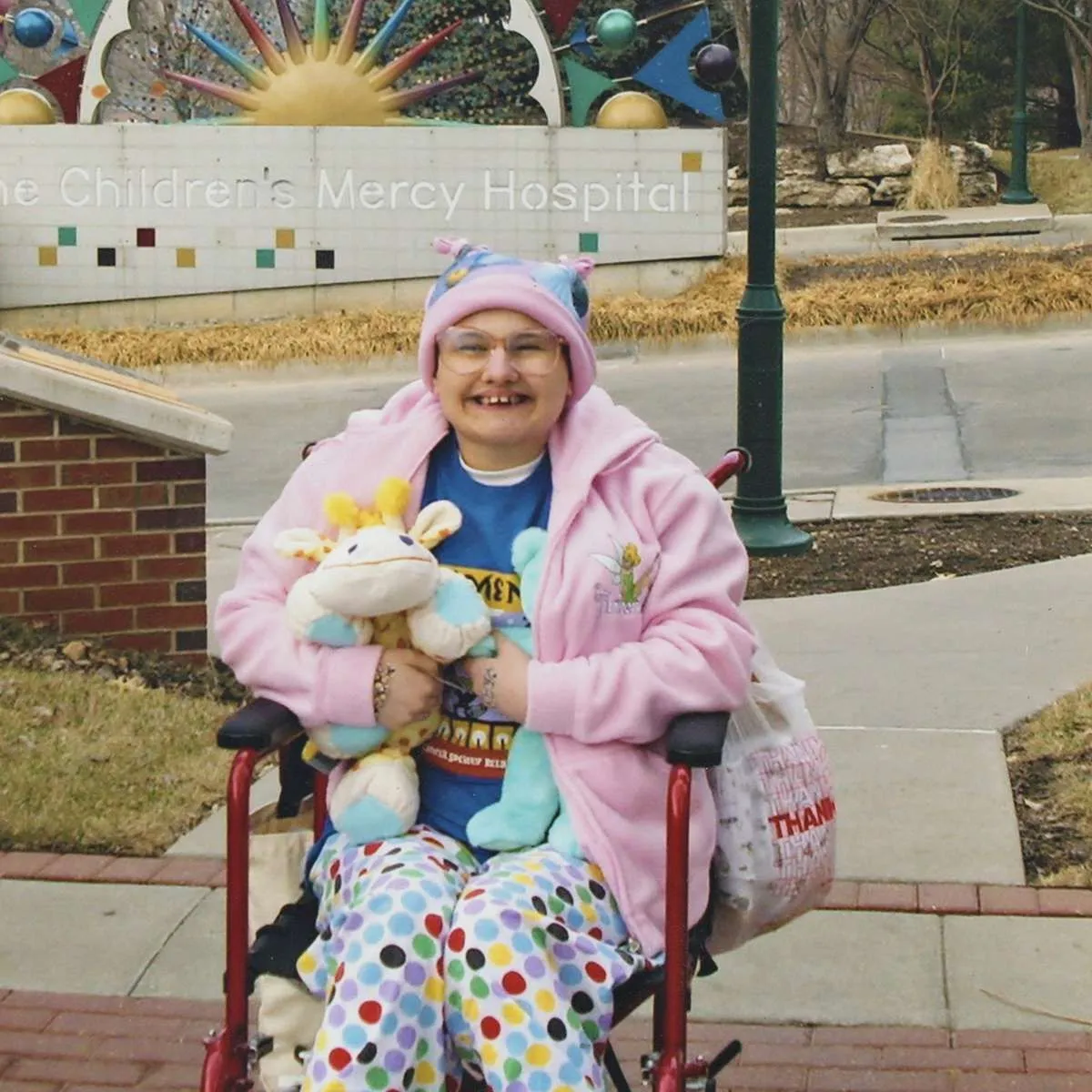
For most of Gypsy Rose Blanchard's childhood, her mother, Dee Dee, told doctors, neighbors and charities that her daughter was gravely ill. According to Dee Dee, Gypsy had leukemia, muscular dystrophy and seizures. Gypsy spent years in a wheelchair and was fed through a tube. In 2015, Gypsy's secret boyfriend, Nicholas Godejohn, stabbed Dee Dee to death in their home in Springfield, Missouri, and the world soon learned that Gypsy could walk.
The case became one of the best-known examples of Munchausen by proxy, a form of abuse in which a caregiver fakes or exaggerates a child's illness. Gypsy pleaded guilty to second-degree murder and was released on parole in December 2023.
Since her release, a loud corner of the internet has argued that everyone got the story backwards. Their evidence is a genetic test. Gypsy has a rare chromosomal condition called 1q21.1 microdeletion, which means a tiny piece of one of her chromosomes is missing. The test result surfaced in medical records that content creator Fancy Macelli released publicly, and Gypsy confirmed to me that she has the condition. Her critics say it explains every illness Dee Dee ever described, which would make Dee Dee a worried mom rather than an abuser.
I wanted to know whether that theory holds up. For Part 5 of The Gypsy Rose Obsession, I sat down with Kira Dineen, a licensed certified genetic counselor and the host of the DNA Today podcast. I sent her Gypsy's 19-page chromosome report, and we went through Dee Dee's claims one at a time.
The first thing Kira explained is that this condition looks different in everyone who has it. Some people with the deletion never have a single symptom, while others have serious developmental delays.
Some of Dee Dee's claims really do line up with the deletion. A smaller head, short stature, eye problems, developmental delay, seizures and feeding problems all appear in the medical literature. Gypsy told me she has a smaller head and strabismus, which is a lazy eye.
Other claims don't line up at all. Kira couldn't find anything connecting the deletion to paralysis, leukemia, muscular dystrophy, salivary gland removal or rotting teeth, and those happen to be some of the biggest items on Dee Dee's list. Here's how it breaks down.
Does the microdeletion explain everything?
Gypsy's critics say her 1q21.1 microdeletion accounts for every condition on her medical history. Here is how the conditions Dee Dee reported line up against what the medical literature actually links to the deletion.
- Small head (microcephaly)Gypsy says she has this.
- Eye problemsThese include strabismus and cataracts. Gypsy says she has strabismus (a lazy eye).
- Short statureGypsy is on the shorter side.
- Developmental delayIt is usually mild to moderate.
- Feeding and swallowing problemsSome children with the deletion need a feeding tube.
- SeizuresGypsy's seizure history came from Dee Dee, and no seizure was ever captured on an EEG in the released records.
- Low muscle toneLow muscle tone is not the same thing as muscular dystrophy.
- Psychiatric riskThe deletion carries added risk for ADHD, autism and schizophrenia. No one has ever said Gypsy has schizophrenia.
- Paralysis and inability to walkDee Dee kept Gypsy in a wheelchair for most of her childhood.
- Leukemia and cancerNo doctor in the released records ever diagnosed it. Every mention traces back to Dee Dee's account.
- Muscular dystrophyGypsy's 2000 EMG and 2001 muscle biopsy did not show it.
- Salivary gland removalGenetic counselor Kira Dineen found nothing in the literature connecting the deletion to this.
- Rotting and pulled teethKira Dineen found nothing in the literature connecting the deletion to this either.
The two lists overlap, but they are not the same list. A real medical condition doesn't rule out abuse, either. Munchausen by proxy includes exaggerating real symptoms as well as inventing new ones, and an underlying diagnosis gives a parent something to build on. When I asked Gypsy about it in New Orleans, she put it this way: "You could have someone with a condition and it still be a Munchausen by proxy case."
Listen to Part 5 to hear my full conversation with Kira and everything Gypsy told me about her diagnosis.
Sources
- Guo & Haldeman-Englert, “1q21.1 Recurrent Deletion,” GeneReviews (updated 2024)
- PRETEND’s interviews with genetic counselor Kira Dineen of DNA Today, Gypsy Rose Blanchard and Andrea Dunlop
- The medical records Fancy Macelli released publicly, which are not Gypsy’s complete medical file
This page is not medical advice.
Frequently asked questions
What is a 1q21.1 microdeletion?
Your DNA is packaged into 46 chromosomes, and you get one copy of each from each parent. Genetic counselor Kira Dineen compares them to the books in a library. A microdeletion means a tiny piece of one of those books is missing. In Gypsy's case, the missing piece sits on chromosome 1 at a spot geneticists label 1q21.1. It amounts to roughly one percent of that chromosome.
How do we know Gypsy has it?
There are two test results. The first appears in the medical records Fancy Macelli released publicly, and Gypsy told me she was originally tested in 2012. Gypsy also sent me the results of a follow-up test, which confirmed that she has the deletion. She had her daughter tested as well, and her daughter's result came back negative.
What symptoms does this condition cause?
It depends on the person, which is what makes it so tricky. Some people with the deletion never have a single symptom and never find out they have it. Others have serious developmental delays. The medical literature links it to a smaller head, short stature, eye problems, developmental delay, feeding difficulties, seizures, low muscle tone and a higher risk of some psychiatric conditions. Having the deletion doesn't mean someone will have any of these.
Which symptoms does Gypsy actually have?
Gypsy told me the deletion affects her in two ways. She has a smaller head than average, which is called microcephaly, and she has strabismus, which is a lazy eye. She told me she doesn't have epilepsy or muscular dystrophy.
Does the microdeletion explain everything Dee Dee said was wrong with Gypsy?
No, it doesn't. Some of Dee Dee's claims line up with the deletion, including the feeding problems and the seizures. Several of the biggest ones don't. Kira couldn't find anything in the medical literature connecting the deletion to paralysis, leukemia, muscular dystrophy, salivary gland problems or rotting teeth. The two lists overlap, but they are not the same list.
Did Gypsy ever have leukemia?
No doctor in the records I reviewed ever diagnosed Gypsy with leukemia. It shows up in those files, but every mention traces back to Dee Dee's own account of Gypsy's history. One hospital form lists "Mother" as the source of that history. I found no oncology records, no chemotherapy and no bone marrow transplant records, and her blood work came back essentially normal.
Did Gypsy have muscular dystrophy?
Muscular dystrophy is a group of diseases in which muscle tissue breaks down and gets replaced over time. A muscle biopsy is how doctors look for that damage, and Gypsy had one in January 2001, when surgeons took a small sample of muscle from her right thigh.
The pathology report found something called type II fiber atrophy, which means some of her muscle fibers had shrunk. The report says that finding suggests disuse, a problem in the central nervous system or other causes. Muscle that doesn't get used shrinks, and that fits a child who wasn't walking, although the report leaves room for a nervous system cause too.
What the pathologist didn't find matters just as much. The report notes none of the classic signs of muscular dystrophy: no muscle fibers breaking down or regenerating, no fat replacing muscle and no inflammation. The surgeon who took the sample noted that the muscle "did not look terribly myopathic," which means it didn't look diseased. A nerve and muscle test a few months earlier, in October 2000, found no evidence of muscle disease either.
The microdeletion is also an unlikely explanation. Muscular dystrophies are caused by changes in specific genes that build and maintain muscle, and the 1q21.1 deletion isn't one of the known causes. GeneReviews doesn't list muscular dystrophy among the deletion's features, and Kira couldn't find it in the medical literature. The deletion is linked to low muscle tone in some people, but low muscle tone means the muscles are floppy or relaxed, not that the muscle tissue is wasting away.
Years later, Dee Dee told a neurologist that the biopsy had confirmed muscular dystrophy. The biopsy report says no such thing.
Could the microdeletion be why Gypsy was in a wheelchair?
Kira found no link between the deletion and paralysis. Low muscle tone is on the list for some people with the deletion, but low muscle tone isn't the same thing as being unable to walk. Today, Gypsy walks without help. I spent half a day with her, and I didn't notice anything unusual about the way she walked or ate.
What about the seizures?
Seizures really are associated with this deletion, and Kira brought them up before I did, so Dee Dee may have been telling the truth about them. The problem is that the seizure history in Gypsy's records came from Dee Dee. A neurologist in 2009 wrote it down while noting that he had no MRI, no EEG and no records from Louisiana to check it against. The only way to confirm a seizure is to catch one on an EEG, and nobody does in the records that have been released.
Gypsy's critics point to a note about schizophrenia in her genetic results. What does that mean?
People with this deletion have a higher risk of schizophrenia than the general population, but most people with the deletion never develop it. More to the point, nobody has ever said Gypsy has schizophrenia. Dee Dee never claimed it, no doctor diagnosed it and Gypsy has never said she has it, so I'm not sure what it's doing in this argument.
If Gypsy had a real genetic condition, can this still be Munchausen by proxy?
Yes, it can. Munchausen by proxy isn't limited to inventing illnesses out of thin air. It also includes exaggerating real symptoms and putting a child through care they don't need. Andrea Dunlop, who hosts the podcast Nobody Should Believe Me, told me that a legitimate medical condition doesn't rule out abuse. An underlying diagnosis can actually make the abuse easier to hide, because it gives the parent something real to build on. Gypsy put it this way: "You could have someone with a condition and it still be a Munchausen by proxy case."
Why didn't the doctors figure this out?
Many of them were working from Dee Dee's version of events. When a parent reports a child's history, a doctor writes it down, and the next doctor often copies it forward into a new chart. After enough visits and enough facilities, a story that started with one parent starts to look like an established medical fact.
Are the released medical records complete?
No, they aren't. Fancy Macelli released a few hundred pages, and a friend of Gypsy's told me she has thousands more. Everything on this page is based on the records that are public. They are only part of Gypsy's medical history, so they can't tell the whole story on their own.
